
Leaks & Prevention
Water Stain on the Ceiling: Causes, Fixes and When to Worry
What causes ceiling water stains, how to find the leak, and the right way to fix and cover the stain.
A water stain on the ceiling means water is getting in from above. DryBeacon crews find the source, dry the ceiling and attic, and repair the damage.
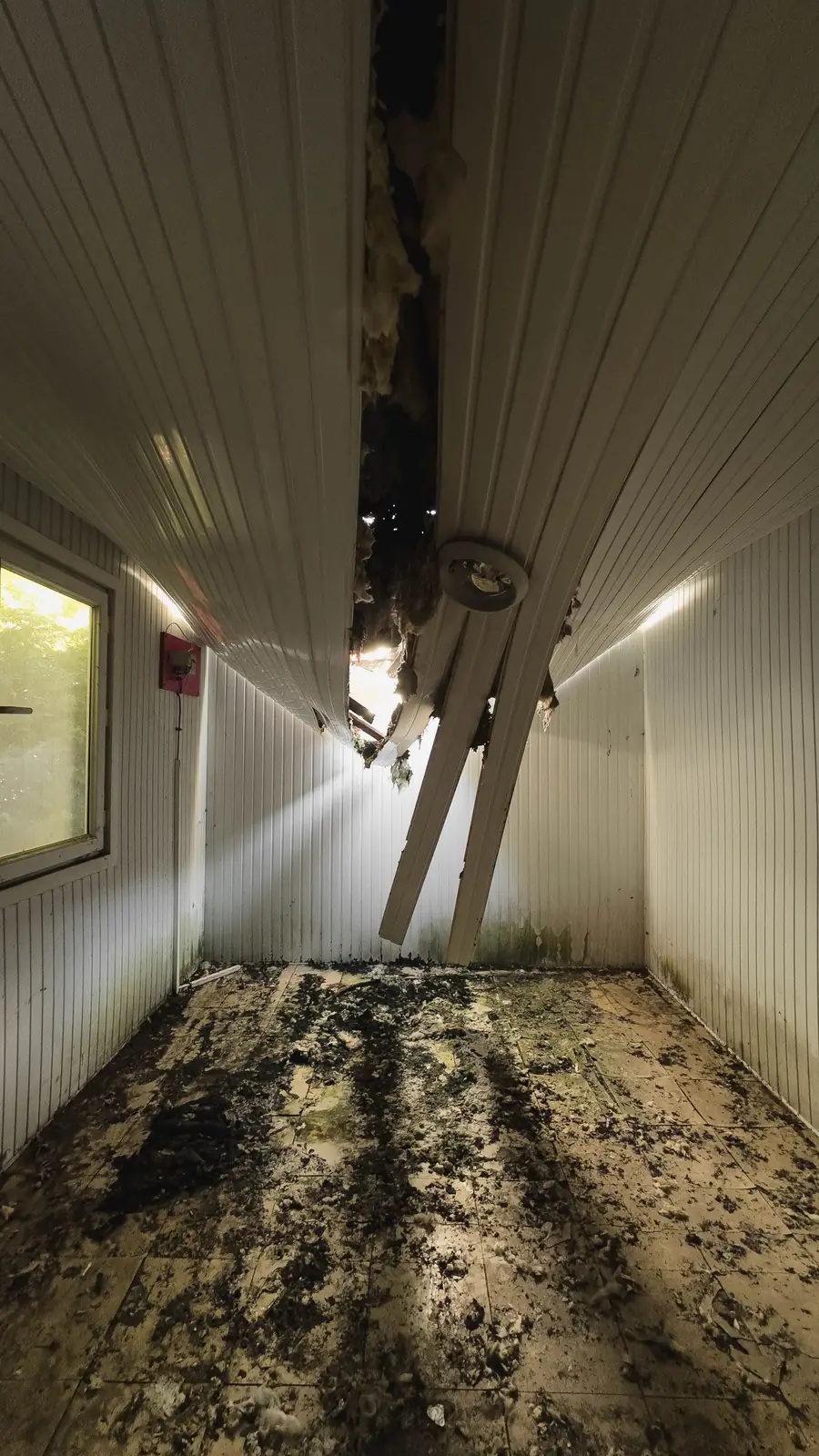
Quick answer: Ceiling water damage repair starts by finding and fixing the leak above, then drying the ceiling, insulation and framing before replacing stained or sagging drywall and repainting. Painting over a wet stain only hides the problem. Because wet ceiling drywall can fail, a sagging or dripping ceiling should be handled the same day.
| Source above the stain | Clues | What fixes it |
|---|---|---|
| Roof leak | Stain grows after rain or snowmelt; near chimneys, vents or valleys | Roof repair, then storm damage restoration if wind or hail caused it |
| Bathroom above | Stain under a tub, shower or toilet; grows after use | Plumbing or grout and caulk repair, then drying |
| Burst or leaking pipe | Sudden dripping, often in cold weather | Plumber, then burst pipe cleanup |
| AC condensate line or drain pan | Stain near an attic air handler in summer | Clear or replace the line and pan |
| Ice dams | Stains along exterior walls in winter | Roof and attic insulation and ventilation |
| Condensation in the attic | Many small spots; frost on nails in winter | Attic ventilation and air sealing |
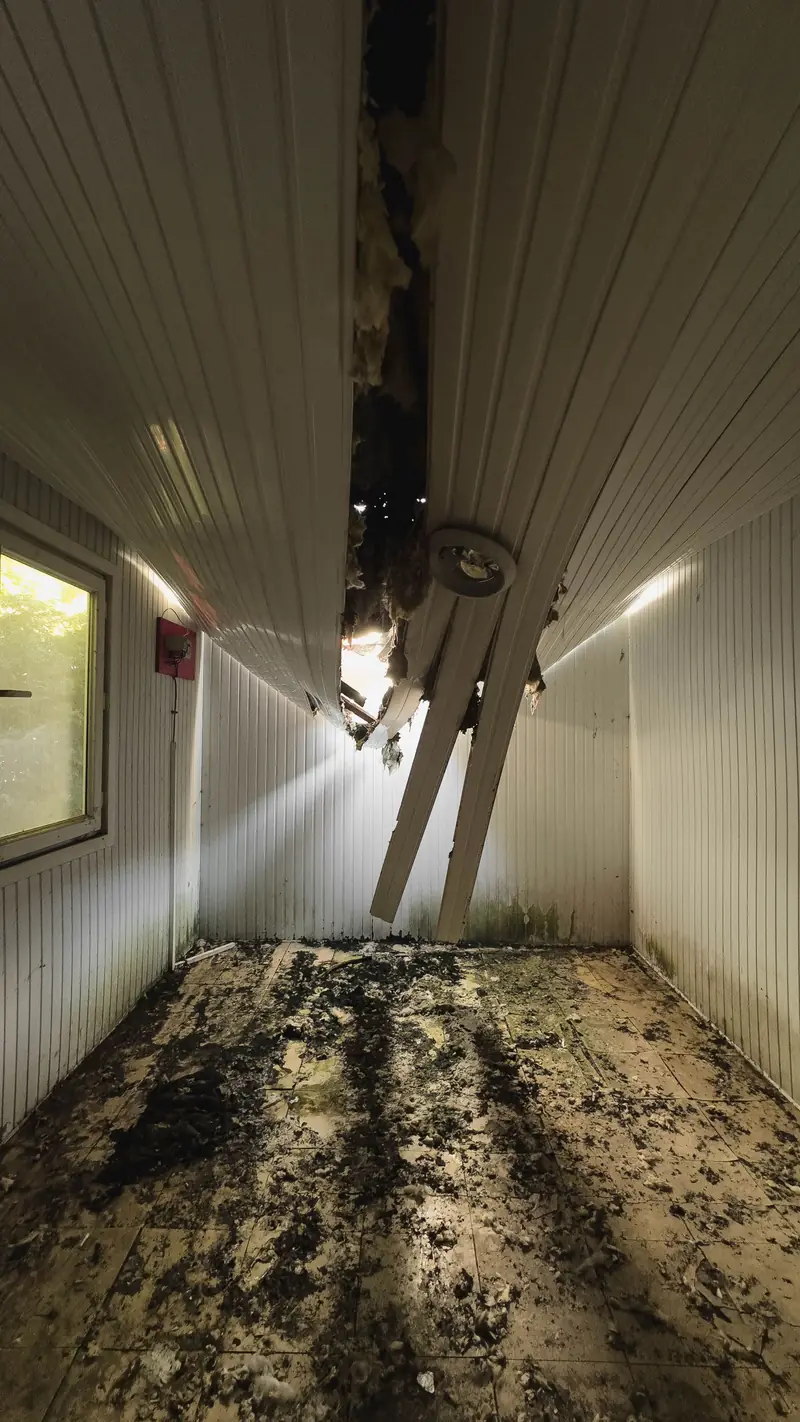
Sometimes. A small stain from a leak that was fixed quickly, on drywall that stayed firm and dried fully, may only need stain-blocking primer and paint. The drywall should be replaced when it:
Older plaster ceilings and popcorn texture need extra care: popcorn texture in homes built before the 1980s may contain asbestos and should be tested before it is disturbed.
When water comes through your ceiling from the unit above, tell your building manager or association and your neighbor right away. Responsibility often depends on where the leak started and on the building's rules and master insurance policy. Document everything with photos and keep notes on who you contacted and when.
A small, dry, old stain on firm drywall is a reasonable DIY primer-and-paint job once the cause is fixed. Call a professional for an active leak, a sagging or soft ceiling, a stain that keeps growing, or any ceiling leak you cannot trace. Wet ceilings often hide wet insulation and framing that need drying first.
Local note: Ceiling leaks have local causes. Ice dams soak ceilings in Massachusetts and Maine. Flat roofs with clogged canales leak in New Mexico, and unit-to-unit leaks are a daily problem in New York City apartments.
A dry, old stain is not an emergency, but it means water got in at some point and may again. A stain that is growing, wet to the touch, dripping or sagging needs attention the same day, because ceiling drywall can fail and the source is still active.
Only after the leak is fixed and the ceiling and the space above it are confirmed dry. Painting over a wet stain hides an active problem and can trap moisture. Use a stain-blocking primer before the finish coat.
Keep people and pets out of the room, move furniture and electronics away, and put a bucket and plastic down. Turn off power to ceiling lights in that area from the breaker panel. Do not stand directly under the bulge. Call for help to drain and repair it safely.
Think about what is above the stain: a bathroom, a roof valley, an attic AC unit or a water line. Stains that appear after rain point to the roof; stains that grow after showers or flushing point to plumbing. Moisture meters and thermal cameras confirm the source.
It often does when the cause is sudden, like a burst pipe or storm damage to the roof. Damage from a long-term slow leak or an aging roof may be excluded. Check your policy and photograph the stain and its source.
Drywall, flooring, trim and cabinets rebuilt once the structure is dry.
Water removal and drying after frozen, corroded or broken supply lines.
Tarping, board-up, water removal and drying after wind, hail and heavy rain.
Leaks & Prevention
What causes ceiling water stains, how to find the leak, and the right way to fix and cover the stain.

Insurance & Claims
What a standard home policy covers, the big exclusions like flood and slow leaks, and how to file a water damage claim.

Leaks & Prevention
Step-by-step actions for the first hour after a pipe bursts, how to spot a hidden burst, and how to prevent frozen pipes.
Last reviewed November 18, 2026 by DryBeacon Editorial. General information, not legal, insurance or professional advice. Read our editorial policy.
Water where it shouldn't be?
Call DryBeacon 24/7 to get water damage help started.
Call 1-800-555-0199