
Insurance & Claims
Does Homeowners Insurance Cover Water Damage? What's Covered and What Isn't
What a standard home policy covers, the big exclusions like flood and slow leaks, and how to file a water damage claim.
Storms break roofs and windows, and then rain gets inside. DryBeacon crews secure the building, get the water out and dry the structure before mold sets in.
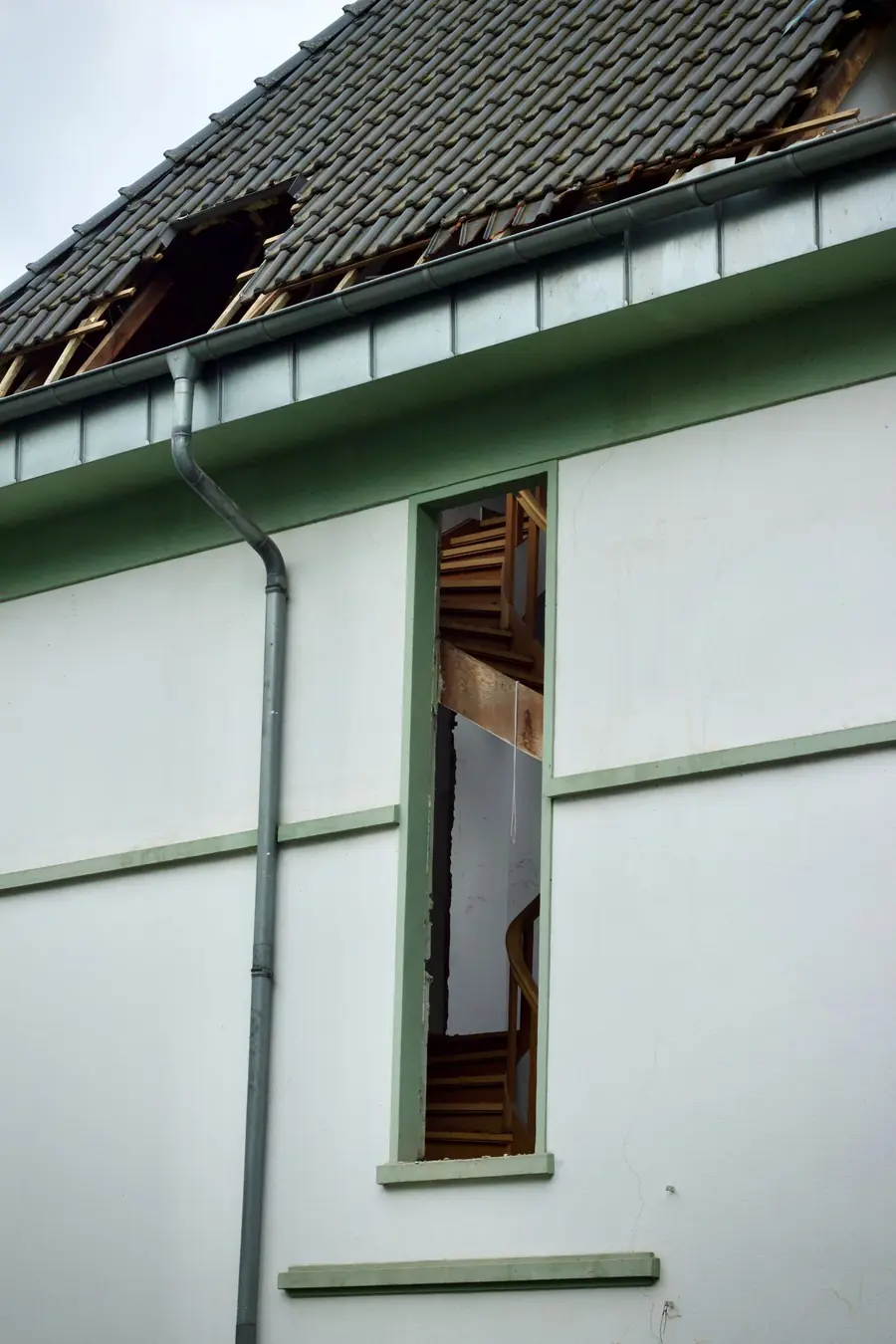
Quick answer: Storm damage restoration secures a damaged building with tarps and board-up, removes rainwater that got inside, dries the structure and repairs what the storm and water ruined. Water through a wind- or hail-damaged roof is often covered by homeowners insurance, but FEMA notes that rising floodwater usually is not.
| Storm type | Typical damage | How water gets in |
|---|---|---|
| Hurricanes and tropical storms | Roof loss, broken windows, surge flooding | Wind-driven rain, storm surge, rising water |
| Thunderstorms and high winds | Missing shingles, fallen trees and limbs | Holes in the roof and siding |
| Hail | Cracked shingles, dented gutters, broken skylights | Leaks that show up days or weeks later |
| Tornadoes | Structural damage, roof and wall failure | Open building envelope |
| Winter storms and ice | Ice dams, collapsed gutters, frozen pipes | Meltwater under shingles; burst pipes |
| Heavy rain | Basement and ground-floor flooding | Groundwater, overwhelmed drains, sump failure |
The difference matters most for insurance. Water that comes in through a hole a storm made in the roof or a broken window is usually treated as storm or wind damage. Water that rises from the ground, such as an overflowing river, storm surge or flooded streets, is flood damage. FEMA notes that most homeowners insurance does not cover flood damage and that flood policies through the National Flood Insurance Program typically have a 30-day waiting period. Many jobs after hurricanes involve both. See flood damage restoration.
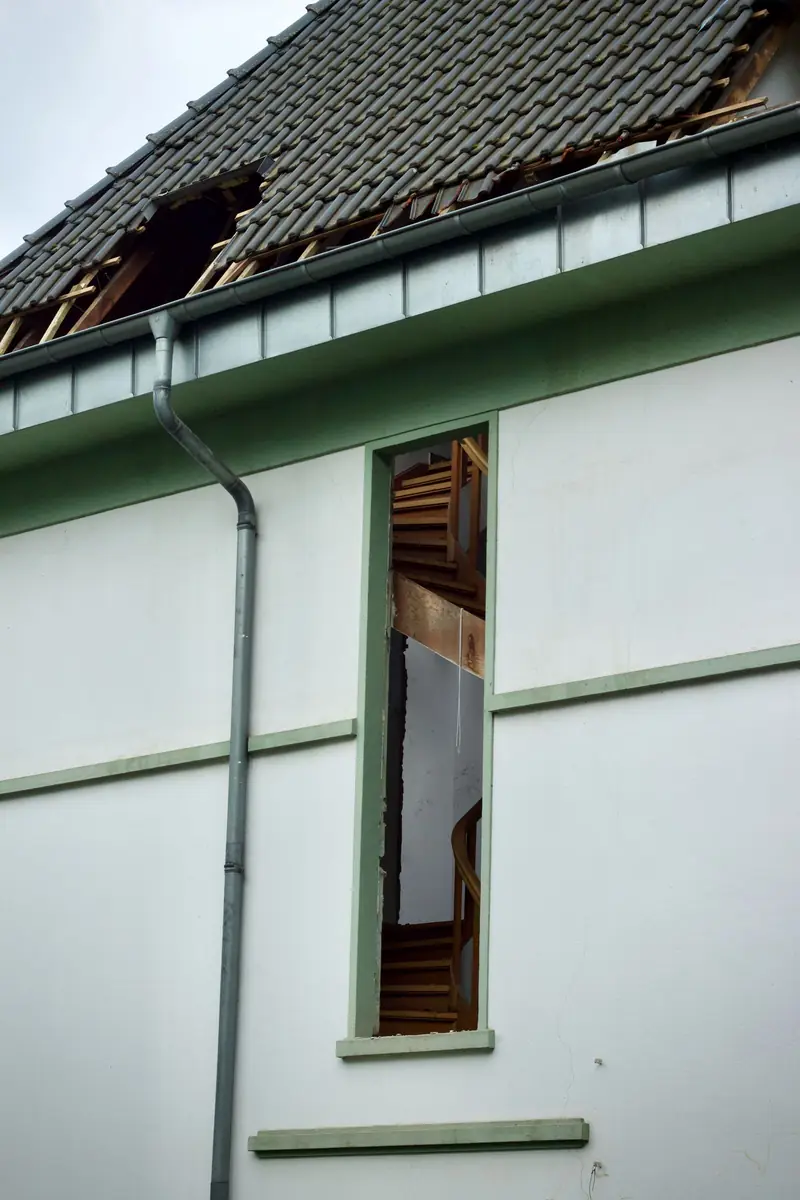
Hail damage in particular may not leak right away. If a storm passed through, have the roof looked at even if you see no water yet.
This is general information. Your policy and insurer decide what is covered.
Local note: Storm work looks different by region. Oklahoma and Kansas lead the country in severe storm disasters, mostly hail and tornadoes. Hail also hits Fort Worth and Colorado Springs hard most years. Mississippi and Florida see hurricane wind and surge on the Gulf, and South Carolina faces both surge and record rain floods.
Make sure everyone is safe and stay away from downed power lines. If water is coming in, move valuables away from it. Photograph the damage outside and inside, make only temporary repairs to prevent more damage, keep receipts, and report the loss to your insurance company.
Water that enters through a roof or window damaged by wind or hail is often covered. Rising water from outside, such as a flooded street or overflowing river, is flood damage, which FEMA notes most homeowners policies do not cover. Check your policy and deductibles, which can be different for wind or hurricane damage.
Tarping covers holes in the roof with heavy tarps fastened over the damage, and board-up covers broken windows and doors with plywood. Both stop more rain and wind from getting in until permanent repairs are made, and insurers usually expect you to take these steps.
As soon as the building is safe to enter. The EPA advises drying water-damaged materials within 24 to 48 hours to prevent mold, and after major storms crews are busy, so call early.
Be careful. After major storms, out-of-area contractors often go door to door. Check for a local address, the licenses your state requires, insurance and written estimates, and never sign over your insurance benefits or pay in full before work begins.
Cleanup of floodwater, mud and soaked materials after storms and rising water.
Stains, sagging drywall and leaks from roofs, bathrooms and AC lines.
Air movers and dehumidifiers dry walls, floors and framing, checked with moisture meters.
Insurance & Claims
What a standard home policy covers, the big exclusions like flood and slow leaks, and how to file a water damage claim.
Restoration Basics
What water damage restoration involves, the steps from inspection to rebuild, and how long each one takes.
Restoration Basics
The factors that decide what water damage restoration costs, how estimates are built, and how insurance fits in.
Last reviewed November 18, 2026 by DryBeacon Editorial. General information, not legal, insurance or professional advice. Read our editorial policy.
Water where it shouldn't be?
Call DryBeacon 24/7 to get water damage help started.
Call 1-800-555-0199